The Culture of Renewal Will Transform the Throwaway Mindset
For decades, modern economies have been shaped around a simple yet destructive assumption:
“Products are temporary.”
From electronics to furniture, from packaging to fashion, products are produced rapidly, used for a limited period of time, and almost immediately discarded. This system often defined as a “throwaway culture” has become the core logic of the linear economy:
take → produce → use → dispose.
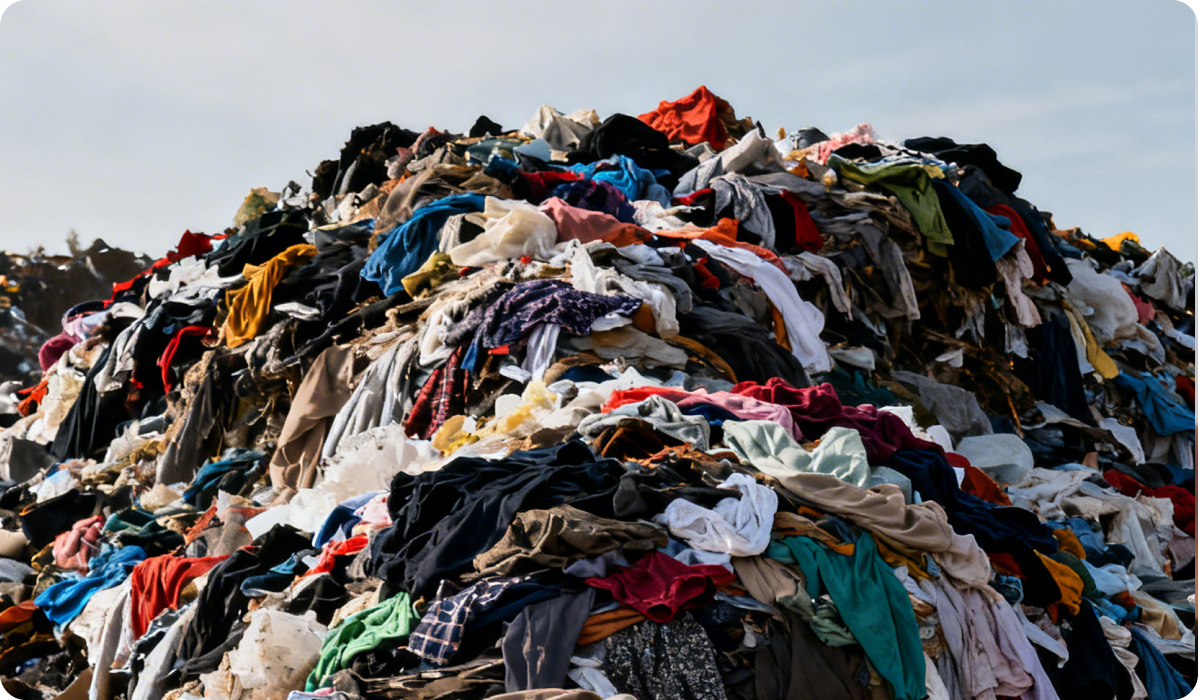
What once appeared to be a symbol of “efficiency” is now clearly understood as a structural problem. The environmental and economic costs of this system can no longer be hidden; they have become visible in overflowing landfills, fragile supply chains, and increasing pressure on natural resources. [15]
The question is no longer whether the throwaway culture is sustainable; [16] the real question is: what will replace it?
08.04.2026
The Hidden Cost of a Throwaway Culture
According to the World Bank, the global economy generates over 2 billion tonnes of municipal waste each year, and if structural transformation does not occur, this amount is projected to increase significantly by 2050. [17][18]Moreover, a significant portion of this waste consists of products that still have usable value. Fashion products are among the most striking examples of this reality. Circular economy literature clearly states that globally, the equivalent of a garbage truck full of fashion products is either burned or sent to landfill every second. [19]
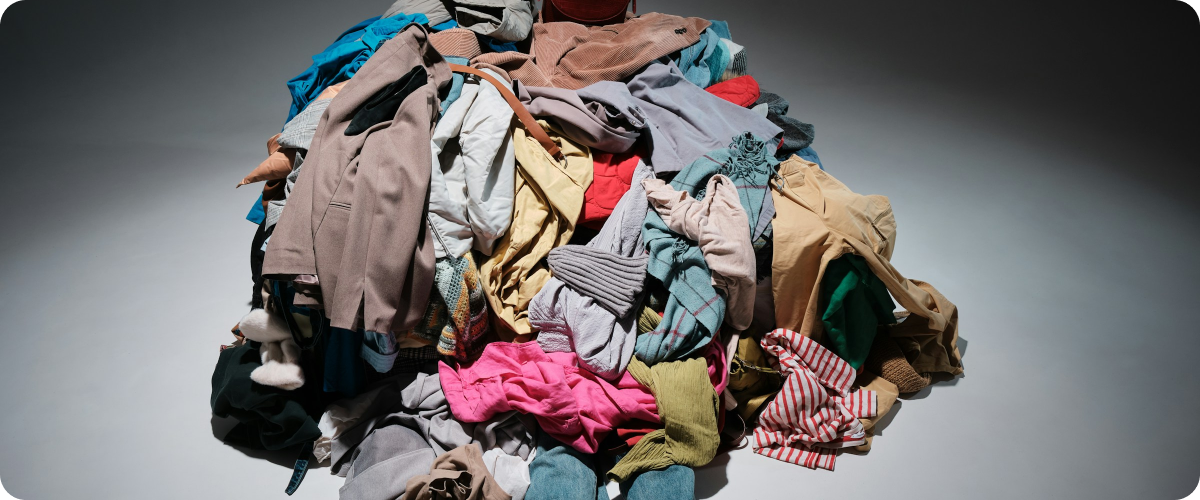
The consequences extend far beyond waste itself. Every product that is discarded prematurely represents wasted water, energy, labor, and capital. There are widely accepted estimates suggesting that a single cotton t-shirt requires approximately 2,700 liters of water. [10]In denim, an even more important reality emerges: the impact is not a single “fixed number.” United Nations sources indicate that depending on process efficiency, a pair of denim jeans may require anywhere from ~2,000 liters to over 10,000 liters of water; under average conditions, it is typically reported within the range of ~3,000–4,000 liters. [11]
When these products become “waste” prematurely, the environmental footprint embedded within them is lost without being recovered back into the system. However, this is not only an ecological problem; it is also an economic inefficiency. The linear fashion system emphasizes that more than $500 billion in value is lost each year when products are not used sufficiently and fail to re-enter circulation. [8] A throwaway culture does not only harm the planet. It also weakens the resilience of the economic system. [20]
A System Designed to Produce Waste
It is clearly seen that the problem is not at the individual level. The problem arises from systems that place “continuous production” at their center. Linear economic models prioritize speed and volume over longevity and renewal. Products are generally not designed with “extended use” in mind, and across most industries, mechanisms to recover value after the first sales channel remain limited. [21] In other words, the economy has long been optimized solely for production not for renewal. This structural gap explains why the circular economy approach has become critical. [16]

From a Throwaway Culture to a Culture of Renewal
The circular economy presents a completely different logic: instead of discarding value, it aims to keep products, materials, and resources in circulation for as long as possible. Here, the defining question is no longer “how quickly can we replace products?” but rather “how long can they continue to generate value?” [2] This shift creates a transformation that can be defined as a culture of renewal. A culture of renewal does not celebrate disposal. It values repair, reuse, and extended lifecycles. The principle is simple:
Collect. Process. Reuse.
Products that would become waste in a linear production/consumption model can be repaired, renewed, and reintroduced into circulation. In doing so, they continue to generate economic value while significantly reducing environmental impact. [22] The implications across the ecosystem are clear:
For the user: It enables access to high-quality products at more affordable prices without compromising quality and authenticity. [23]
For the brand: It reduces waste while opening new revenue streams and strengthening measurable sustainability performance. [21]
For public authorities and regulators: It provides applicable mechanisms in areas such as fashion waste, resource scarcity, and emission pressure. [24]
For the planet: It reduces new production pressure and decreases water, energy, and chemical loads. [25]
A culture of renewal does not only solve a “waste” problem. It redesigns the relationship between production, consumption, and value. [16]
Circular Fashion as a Scalable System
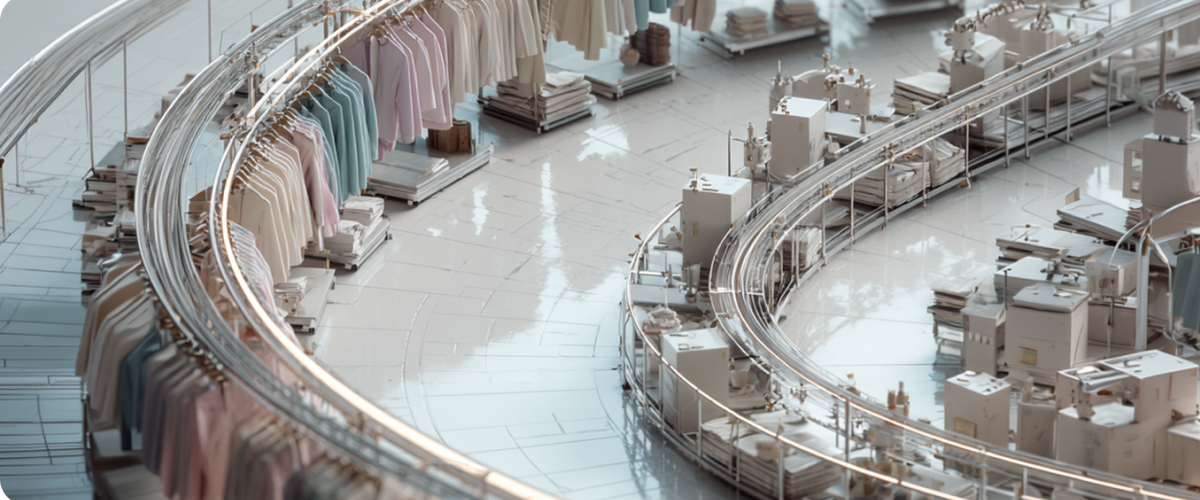
This transformation is now becoming more visible in fashion. Second-hand / reuse markets are, according to many analyses, growing faster than primary markets and are expected to reach a scale of hundreds of billions of dollars in the coming years. [26] Clearly, this growth is more than a “trend.” It signals a structural shift in how value is created and preserved.
Users are no longer only in pursuit of novelty. They are seeking smarter consumption models that optimize quality, accessibility, sustainability, and discovery at the same time. [27] Circular fashion systems respond to this need by extending product lifecycles and keeping valuable products in use for longer. However, building this at scale is not possible through good intentions alone; operational infrastructure is also essential. This is where nivo comes into play.
nivo and Renewal Infrastructure
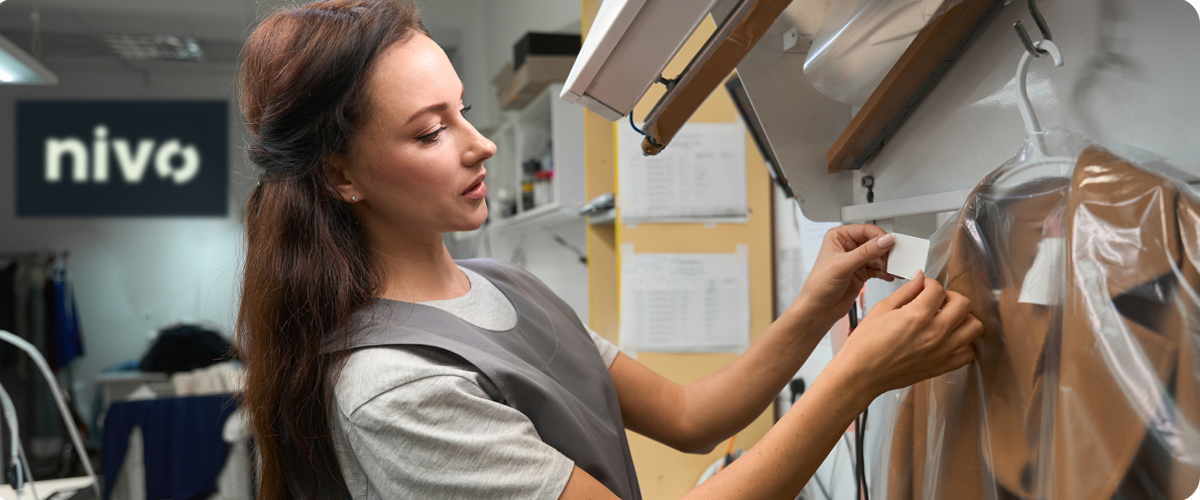
At nivo, circularity is not a concept; it is an operational system. Products collected from partners are processed in the Renewal Center one of the first and largest industrial-scale renewal centers in Turkey and after undergoing a rigorous process, they are reintroduced into circulation through stores and other distribution channels. With this model, products gain a second life. At the same time:
Brands recover economic value from defective and returned inventory.
Users gain access to renewed fashion at accessible prices.
Resources embedded in existing products remain within the system; new production pressure decreases.
The system operates through a simple yet scalable loop:
Collect. Process. Reuse.
This approach reduces waste, preserves resources, and transforms idle value into economic value.
A New Standard for the Industry
The transition from a throwaway culture to a culture of renewal is not a niche sustainability movement; it is rapidly becoming an economic necessity. Resource scarcity, increasing regulatory pressure, and changing user expectations are forcing industries to reconsider the foundations of production. This direction is clearly reflected in policy areas such as durability/repairability, traceability, and producer responsibility in fashion. [33]
Circular systems enable brands to turn waste into value, extend product lifecycles, and transition to a more resilient economic model. However, it is not realistic for this transformation to be built by a single organization alone. Circularity grows through ecosystems.

Building the Culture of Renewal Together
At nivo, we do not see circular fashion as an isolated initiative, but as part of a larger universe, The Circuverse where products remain in motion and value is continuously renewed.In this universe, brands, users, regulators, and operational partners collectively build a smarter system of production and reuse. Especially for fashion brands, the transition to circular systems presents a clear opportunity: unsold, returned, or defective products do not have to be a “loss”; they can become the starting point of a new cycle.
Partners working with nivo can integrate circularity into their operations without building complex renewal infrastructures from scratch and transform products considered as waste into a system that continuously generates value. Because the future of fashion will not be built on disposal. It will be built on renewing what already exists. For potential partners who want to be part of this system, our promise is clear: nivo establishes circularity as a measurable, traceable, and scalable operation moving it beyond discourse and enables brands to join this transformation with a ready infrastructure.
References:
[1] [18] What a Waste 2.0
https://datatopics.worldbank.org/what-a-waste
[2] Ellen MacArthur Foundation – Circular Economy Principles.
https://content.ellenmacarthurfoundation.org/m/6d5071bb8a5f05a2/original/A-New-Textiles-Economy-Redesigning-fashions-future.pdf
[8] Ellen MacArthur Foundation – Economic impact of underused fashion inventory.
https://content.ellenmacarthurfoundation.org/m/6d5071bb8a5f05a2/original/A-New-Textiles-Economy-Redesigning-fashions-future.pdf
[10] WWF – Fast Fashion Disaster (Pamuklu tişörtün su tüketimi).
https://www.wwf.org.uk/articles/fast-fashion-disaster
[11] UNEP – Cleaning Up Couture: What’s in Your Jeans?
https://www.unep.org/news-and-stories/story/cleaning-couture-whats-your-jeans
[15] UNEP – Global Waste Management Outlook 2024.
https://www.unep.org/resources/global-waste-management-outlook-2024
[16] Ellen MacArthur Foundation – Linear vs Circular Systemic Issues.
https://content.ellenmacarthurfoundation.org/m/6d5071bb8a5f05a2/original/A-New-Textiles-Economy-Redesigning-fashions-future.pdf
[17] World Bank – What a Waste 2.0 (Küresel atık verisi).
https://datatopics.worldbank.org/what-a-waste/
[18] World Bank – Atık projeksiyonları (2050 tahminleri).
https://datatopics.worldbank.org/what-a-waste/
[19] Ellen MacArthur Foundation – “Her saniye bir çöp kamyonu tekstil atığı” verisi.
https://content.ellenmacarthurfoundation.org/m/6d5071bb8a5f05a2/original/A-New-Textiles-Economy-Redesigning-fashions-future.pdf
[20] UNEP – Global Waste Management Outlook 2024 (ekonomik sistem kırılganlığı).
https://www.unep.org/resources/global-waste-management-outlook-2024
[21] Ellen MacArthur Foundation – Linear fashion system & product design issues.
https://content.ellenmacarthurfoundation.org/m/6d5071bb8a5f05a2/original/A-New-Textiles-Economy-Redesigning-fashions-future.pdf
[22] Ellen MacArthur Foundation – Circular fashion and reuse models.
https://content.ellenmacarthurfoundation.org/m/6d5071bb8a5f05a2/original/A-New-Textiles-Economy-Redesigning-fashions-future.pdf
[23] McKinsey – The State of Fashion 2026: User expectations & value perception.
https://www.mckinsey.com/industries/retail/our-insights/state-of-fashion
[24] European Commission – EU Textile Strategy & policy mechanisms.
https://environment.ec.europa.eu/strategy/textiles-strategy_en
[25] European Parliament – Fast fashion & environmental impacts.
https://www.europarl.europa.eu/topics/en/article/20201208STO93327/fast-fashion-eu-laws-for-sustainable-textile-consumption
[26] BCG – Resale & secondhand market growth forecasts.
https://www.bcg.com/publications/2025/how-fashion-luxury-brands-can-win-secondhand-market
[27] McKinsey – The State of Fashion 2026: Consumer behaviour insights.
https://www.mckinsey.com/industries/retail/our-insights/state-of-fashion