A Step Toward Circular Fashion: What is Cradle to Cradle?
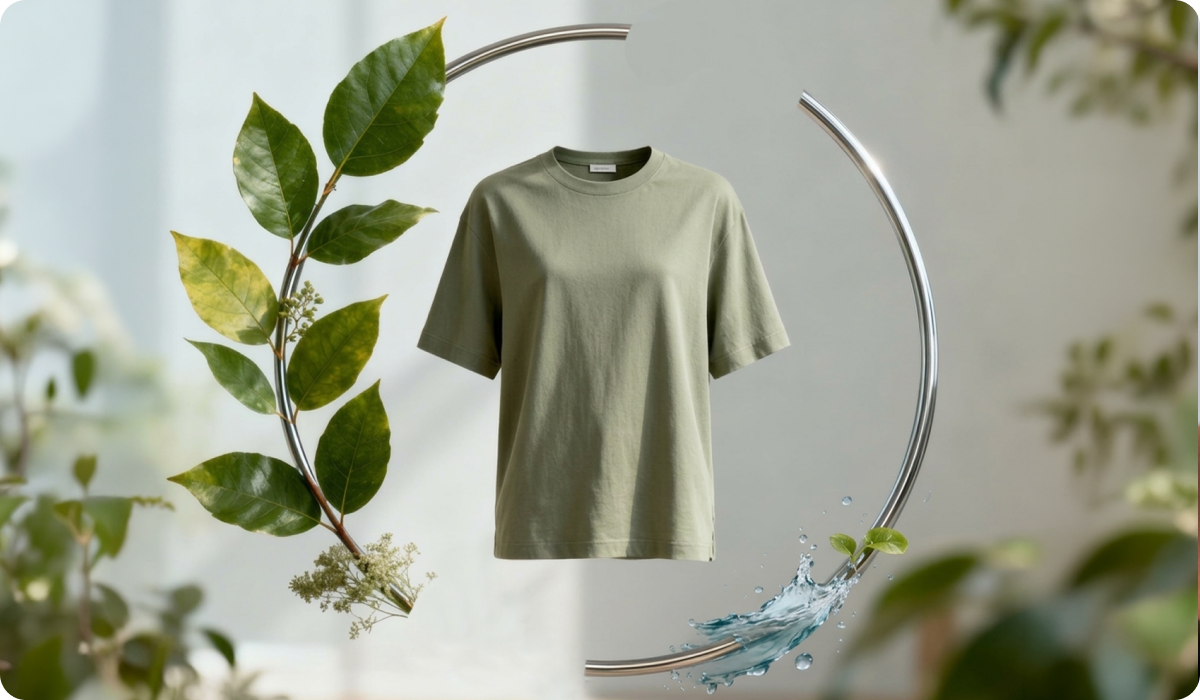
Circular fashion is not just about “consuming less.” It is also about designing products from the very beginning for their next use. As a production approach, Cradle to Cradle (C2C) comes into play exactly at this point. Let’s take a closer look at what this means.
Today, we still largely operate within linear economic models. In many industries, products are still treated as temporary. However, the model of “take–make–use–dispose” is no longer just a habit—it is a design flaw. And the cost of this approach continues to grow for all of us every year. [10]
Even institutional sources such as the European Parliament point to the same reality: a single cotton t-shirt is estimated to require around 2,700 liters of water. [11] Denim tells a similar story. According to UNEP, the most efficient processes require around 2,000 liters, while the least efficient exceed 10,000 liters, with typical conditions ranging between 3,000–4,000 liters. [12] On the waste side, the picture is equally clear. The World Bank reports that global municipal solid waste reached 2.01 billion tonnes in 2016—effectively “2+ billion tonnes.” This is not a niche issue; it is systemic. [13]
Fashion acts as an accelerator within this system. While global production volumes vary depending on methodology, McKinsey notes that annual production surpassed 100 billion items for the first time in 2014. Some academic studies estimate annual consumption at around 80 billion items. Therefore, the range of ~80–100+ billion should be understood as an approximation. [14]
Naturally, this also has a significant economic dimension. The Ellen MacArthur Foundation estimates that over $500 billion in value is lost annually due to underutilized clothing and lack of recycling. This is not only a sustainability issue—it is a structural financial vulnerability. [15]
07.04.2026
What is Cradle to Cradle?
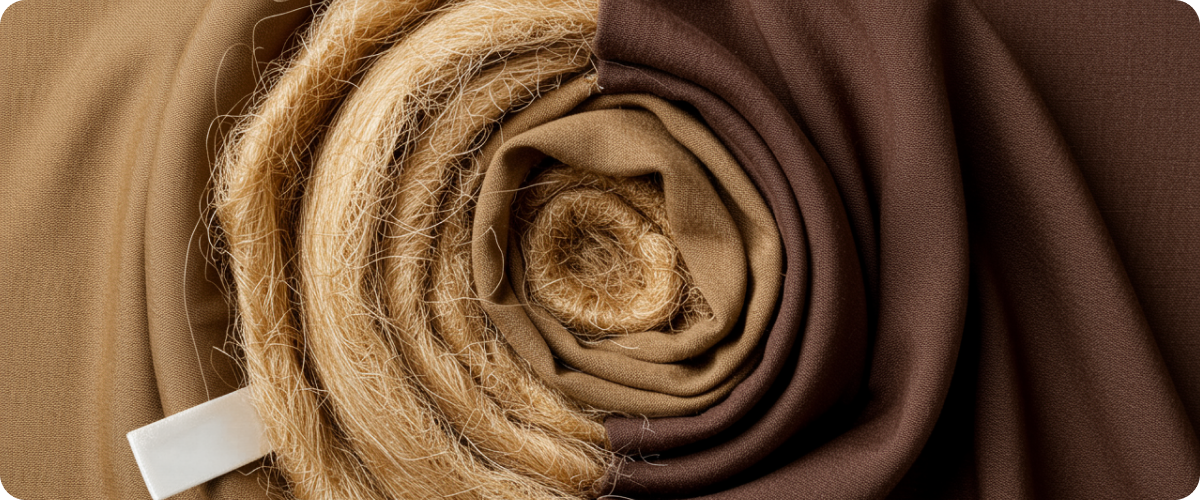
Cradle to Cradle (C2C) can be defined as a multi-criteria product standard and certification program that designs fashion products from day one for their next use, and proves this through independent verification. The approach aims to remove the concept of “waste” from product design. It structures products around two cycles: the technical cycle and the biological cycle. Materials are planned either to safely return to nature or to be reused within technical systems without losing value. [7] What distinguishes C2C is its focus not on intention, but on proof. The approach requires defining the technical or biological pathway of each homogeneous material and explicitly states that, for the technical cycle, recycling must be included as at least one target pathway. [16]
When it comes to C2C “certification,” it is not possible to refer to a single score. Performance is required across five categories:
- •Material Health
- •Product Circularity
- •Clean Air & Climate Protection
- •Water & Soil Stewardship
Social Fairness
Each category is assessed independently with its own levels. [3] The overall certification level is determined by the lowest-performing category—a “weakest link” logic.The entire process is built on third-party verification. It requires working closely with an independent assessment body, compiling product and production data, submitting for evaluation, and after certification, continuously reporting progress and undergoing recertification. [17]
C2C in Fashion
The practical implication of C2C in the fashion industry is as follows: Fiber selection, blend ratios, dyes and finishing processes, accessories, labels, sewing threads… all of these become part of the decision-making process for the product’s next use. In other words, ideally, product circularity begins at the design stage. [19]
An example can more clearly demonstrate where C2C is heading in fashion: A cashmere sweater under Ralph Lauren is listed in the C2C Certified Products Registry under the Fashion & Textiles / Apparel category, and its certification document confirms a Full Scope Gold level. In this way, it is proven that the product has been produced in a form much more aligned with the circular fashion approach. This shows that the approach is not only theoretical, but can be applied at the product level. [21]
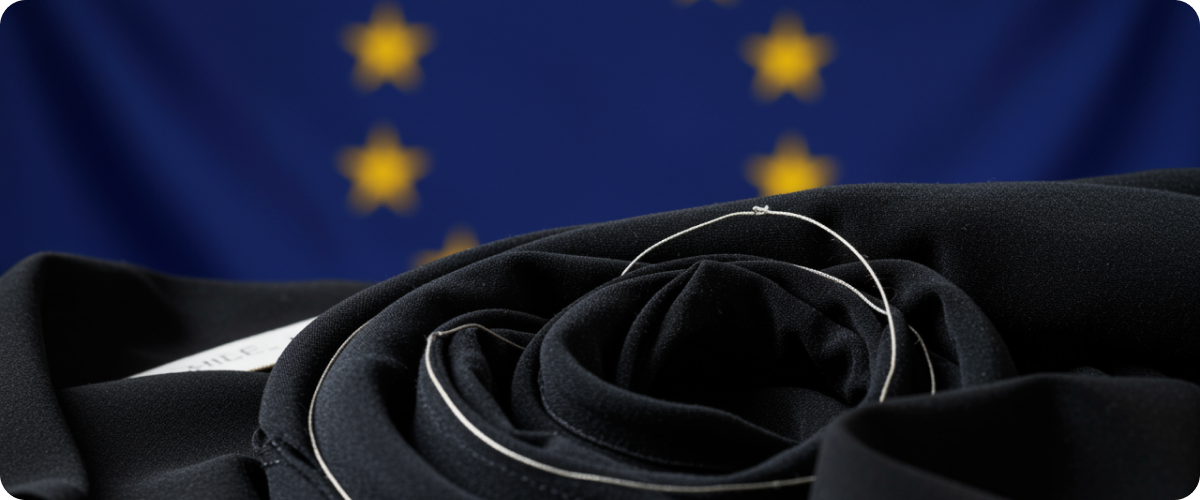
Moreover, especially in Europe, regulations are moving in the same direction. The European Commission’s strategy for the fashion industry sets a framework ranging from design requirements aimed at making products longer-lasting, more repairable, and more recyclable, to the Digital Product Passport and mandatory/harmonized EPR. Within this framework, “verifiable claims” and “traceable data” are no longer a luxury, but a fundamental expectation. [22]
At this point, the C2C approach acts as a lever. It systematizes design decisions, material safety, and supply chain collaboration. It makes sustainability claims more concrete and more auditable. However, it is not sufficient on its own; circularity can only scale through an end-to-end system design. [1]
The Center of Circular Fashion: nivo
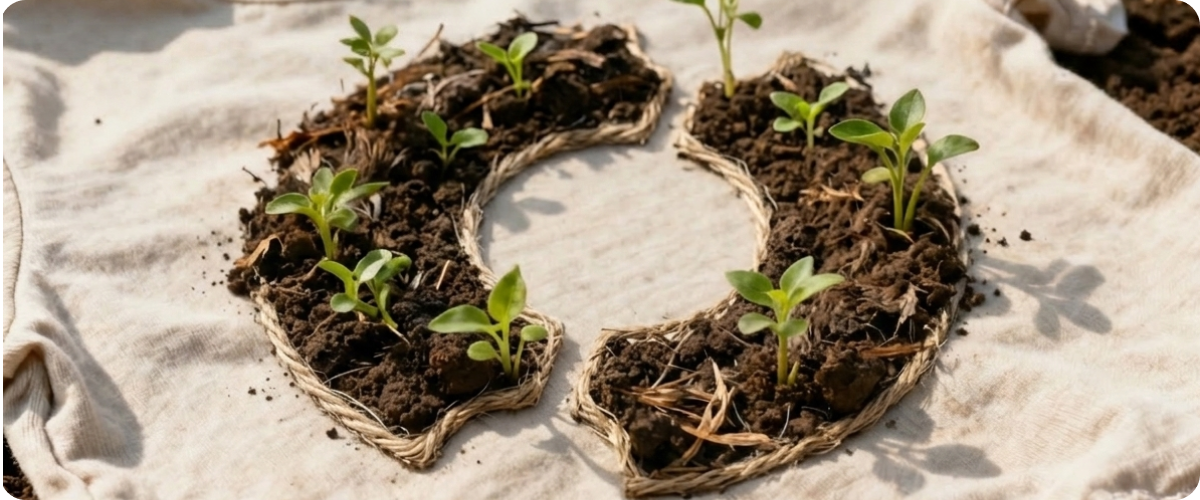
While C2C is an approach that secures the future of the product at the design stage, nivo expands this future through the right system design and operations.Our promise for partner brands with whom we will grow the circular fashion ecosystem together is clear: We treat circularity not as a pilot, but as a measurable system. We move product flows away from a “loss reduction” reflex toward a value preservation discipline.
In a world aligned with verification approaches like C2C and where regulatory directions are becoming clearer (such as Digital Product Passport and EPR), we help brands bring their circular fashion strategies into real-world operations. We can take the next step together.
Referanslar:
[1] European Parliament. Fast fashion: EU laws for sustainable textile consumption.
https://www.europarl.europa.eu/topics/en/article/20201208STO93327/fast-fashion-eu-laws-for-sustainable-textile-consumption
[2] European Parliament. Fast fashion: EU laws for sustainable textile consumption. (Metindeki ikinci atıf)
[3] UNEP. Cleaning up couture: What’s in your jeans?
https://www.unep.org/news-and-stories/story/cleaning-couture-whats-your-jeans
[4] World Bank. What a Waste 2.0.
https://datatopics.worldbank.org/what-a-waste/
[5] McKinsey & Company. Style that's sustainable: A new fast‑fashion formula.
https://www.mckinsey.com/capabilities/sustainability/our-insights/style-thats-sustainable-a-new-fast-fashion-formula
[6] Ellen MacArthur Foundation. A New Textiles Economy: Redesigning fashion’s future.
https://content.ellenmacarthurfoundation.org/m/6d5071bb8a5f05a2/original/A-New-Textiles-Economy-Redesigning-fashions-future.pdf
[7] Cradle to Cradle Products Innovation Institute. C2C Certified® Product Standard Version 4.0.
https://cdn.c2ccertified.org/resources/certification/standard/STD_C2C_Certified_V4.0_FINAL_031621.pdf
[8] Cradle to Cradle Products Innovation Institute. C2C Certified® Product Standard Requirements.
(Aynı standardın ikinci referansı)
[9] Cradle to Cradle Certified®. Standard Overview / Performance Categories.
https://c2ccertified.org
[10] Cradle to Cradle Products Innovation Institute. The Process – Get Certified.
https://c2ccertified.org/get-certified/the-process
[11] Cradle to Cradle Certified®. Fashion & Textiles Guidance.
[12] Cradle to Cradle Certified® Products Registry. Cashmere Sweater (Ralph Lauren).
https://c2ccertified.org/certified-products/cashmere-sweater
[13] Cradle to Cradle Certified®. Cashmere Sweater – Full Scope Gold Certificate.
[14] European Commission. EU Strategy for Sustainable and Circular Textiles.
https://environment.ec.europa.eu/strategy/textiles-strategy_en
[15] PMC. Circular Economy and Sustainability of the Clothing Industry.
https://pmc.ncbi.nlm.nih.gov/articles/PMC8257395